
Wood decks, cedar and treated
Real wood still has a place. It just comes with homework. We’ll tell you exactly how much before you choose it.

W.1 / MaterialsCedar or pressure-treated
Cedar
Light, stable, and naturally resistant to decay. Smells great, looks warm, and weathers to silver-grey if you let it.
- Pick it for
- Looks and a lighter board
- Watch for
- Softer surface. Dents and scuffs show.
Pressure-treated
Chemically treated lumber. Tough and usually the most economical decking. Greenish or brown when new, takes stain once it dries out.
- Pick it for
- Budget and durability
- Watch for
- Checking and splitting if left unsealed
W.2 / FitWhen wood makes sense
- You like the look of real grain and don’t mind it aging.
- The budget is tight and the deck is small or simple.
- It’s a sunny deck that dries out fast after rain.
- You plan to replace or redesign the deck in a few years anyway.
- You enjoy maintaining things. Some people do.
If the deck sits under firs and stays damp from fall to spring, we’ll probably steer you toward composite decking. That’s not an upsell. It’s where wood struggles most.
W.3 / MaintenanceUpkeep, honestly
Wood decks in this climate need a routine. Skip it and the surface goes grey, then green, then soft.
- Every year: clean off moss and grime with a deck cleaner and a stiff brush.
- Every few years: re-coat with stain or sealer once water stops beading.
- As needed: reset popped nails or screws, replace a cracked board before it spreads.
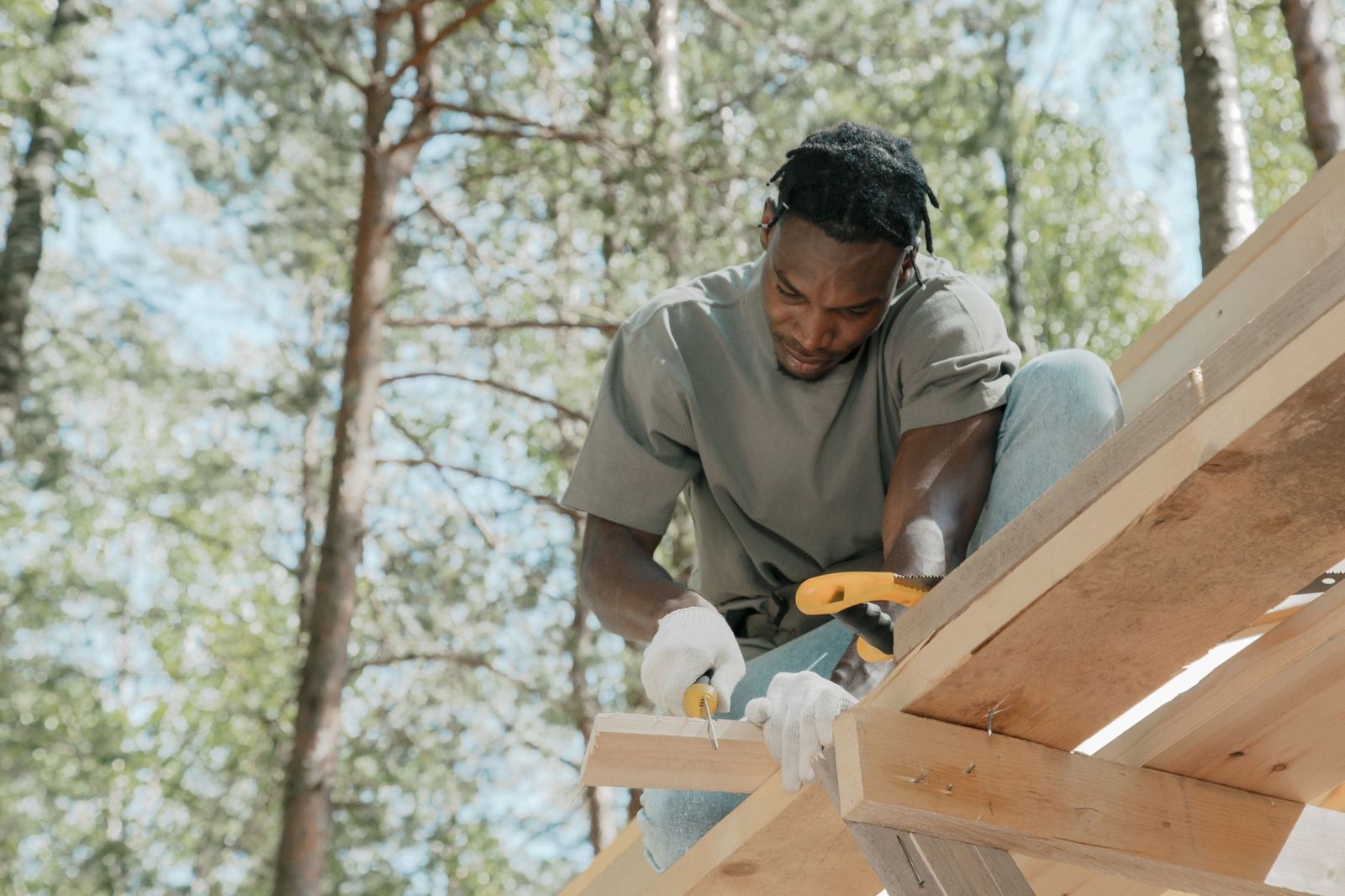
One thing is identical for wood and composite: the frame. Joists, beams and footings get the same care either way.
W.4 / MethodHow we build a wood deck
Wood moves with the seasons. A good wood deck is built to let it.
- Board gaps set for the lumber’s moisture on install day, so boards don’t buckle when wet or open wide when dry.
- Coated or stainless deck screws instead of nails. Screws hold as the wood shrinks and swells.
- Cut ends sealed before the boards go down. End grain soaks up water fastest.
- Board orientation chosen to reduce cupping as boards dry.
- A finish plan agreed in advance: clear, semi-transparent or solid stain, and when the first coat goes on.
W.5 / QuestionsQuestions we get
Should a new cedar deck be sealed right away?
Usually after a short drying period, depending on the lumber and the product. We’ll give you the timing for the specific finish.
Can I switch from wood to composite later?
Often, yes. If the frame is in good shape and spaced right, new composite boards can go on it. See deck repair and resurfacing.
How long before a wood deck needs its first re-coat?
It depends on sun, shade and the product used. The simple test: when water stops beading and starts soaking in, it’s time. Shaded decks often need attention sooner because they stay damp.
Can a wood deck change color later?
Yes. A solid or semi-transparent stain can shift the color once the old finish is cleaned off. Going lighter is harder than going darker.
W.6 / RelatedKeep reading
Price a wood deck
Want cedar and composite quoted side by side? Ask. We’ll write both up.