
Composite decks for a wet climate
Our main build. Boards that don’t need staining, on a frame that doesn’t need excuses. Here is what goes into one.
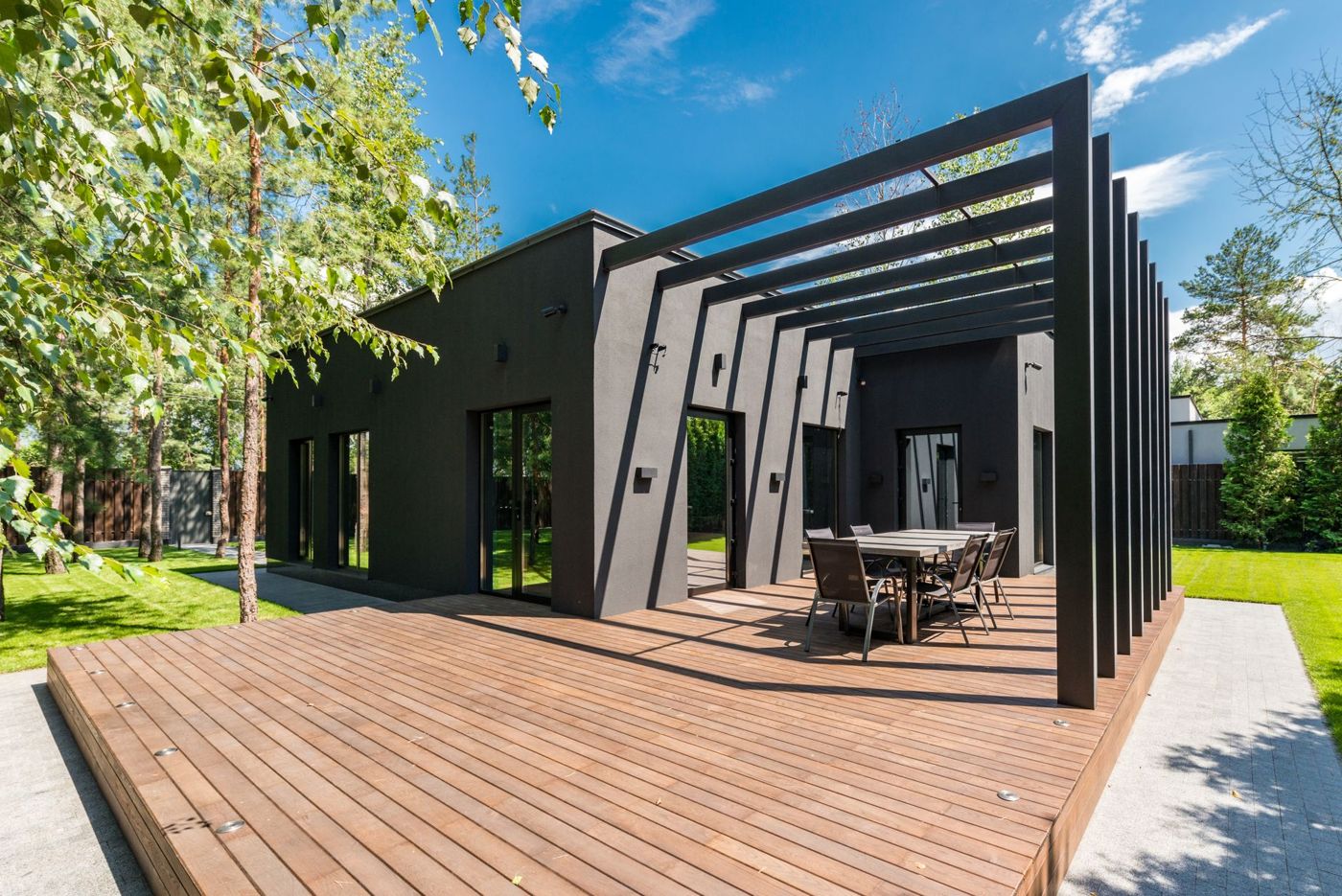
C.1 / Board typesCapped composite or PVC
Not all “composite” is the same product. We walk you through samples at the estimate. The short version:
Capped composite
A wood-fiber and plastic core wrapped in a tough polymer shell. The shell is what handles stains, fading and moisture. This is what most of our decks use.
- Feel
- Solid, a bit like wood underfoot
- Good for
- Most back-yard decks
PVC (cellular)
All-plastic boards with no wood content. Lighter, and very resistant to moisture. A good pick for decks close to the ground or in constant shade.
- Feel
- Lighter, slightly softer
- Good for
- Low, damp or shaded decks
Older uncapped composite boards could absorb water and grow mildew. Modern capped boards from leading manufacturers fixed most of that. We don’t install uncapped boards.
Darker boards look rich but hold more heat in direct afternoon sun. On a south-facing deck, a mid-tone is often the better pick.
C.2 / LayoutsShapes that fit the lot
- Ground-level platform. Low and wide, steps straight onto the lawn. Needs extra attention to airflow underneath.
- Raised deck off the kitchen. Common on Seattle lots that drop away from the house. Stairs and railings become part of the design.
- Multi-level. Two or three platforms stepping down a slope. Breaks up a big deck into dining and lounging zones.
- Deck plus cover. A roof or pergola over part of the deck so it gets used in October, too.
C.3 / RailingsRailings that match the view
Railing is the part people see from inside the house. Pick it for the view as much as for safety.
Aluminum
Slim balusters, powder-coated, no rust. Black or bronze suits most modern houses.
Cable
Horizontal stainless cables that keep the view open. Great over a yard or water.
Composite
Matches the decking. Classic look, suits traditional and craftsman houses.
C.4 / Stairs & lightingStairs and low-voltage light
Wide stairs feel generous and double as seating. Long runs get a landing. Treads are the same board as the deck, with a contrasting fascia if you want the edge to read clearly.
Low-voltage lights go in the stair risers, post caps or under the railing cap. They make steps visible on dark winter evenings, which here start around four in the afternoon. We plan the wiring route before the boards go down.
C.5 / DetailsFastening and finish details
The small decisions are what make a composite deck look built instead of assembled.
- Hidden fasteners. Clips in grooved board edges keep the surface free of screw heads. Face screws with color-matched plugs are the alternative where the board calls for it.
- Picture-frame border. A perimeter board runs around the edge and hides the cut board ends. It is the cleanest finish on most decks.
- Breaker board. On long decks, a board across the run avoids awkward butt joints and gives the surface a deliberate pattern.
- Fascia. Matching fascia covers the rim joist so nobody sees pressure-treated framing from the yard.
C.6 / StructureFraming and drainage
Composite boards don’t rot. The frame under them is wood and can. So we build it like it matters.
- Pressure-treated joists and beams, spaced to what the board maker specifies.
- Joist tape on top of the framing to keep water out of fastener holes.
- Proper flashing where the deck meets the house, so water doesn’t get behind the siding.
- Footings set for the soil and the load, not just a block on the dirt.
- Gaps and airflow so water drains and the underside can dry out.
C.7 / UpkeepWhat owning one looks like
Sweep off needles and leaves so they don’t sit wet. Wash with warm soapy water and a soft brush in spring and fall. Keep board gaps clear. Use plastic shovels in snow. Don’t use a pressure washer close up unless the board maker allows it.
C.8 / QuestionsQuestions we get
Is composite slippery in the rain?
Capped boards have an embossed grain that gives grip. Any surface gets slick with wet leaves or algae, so regular sweeping matters more than the board choice.
How long does a composite deck take to build?
It depends on size, height and whether a permit is involved. You’ll get a realistic schedule with the written estimate, not a guess before anyone has seen the yard.
Can you build over an existing concrete patio?
Sometimes, with a low-profile frame on sleepers. The patio has to drain well, or water will pool under the boards. We check that first.
Do composite boards fade?
Capped boards are made to resist fading, but any outdoor surface changes a little in sun over the years. Lighter colors show it least.
Can I mix composite decking with a wood railing?
You can. Most people pick aluminum or composite railing to keep upkeep low across the whole deck, but the choice is yours.
C.9 / RelatedKeep reading
Price a composite deck
We’ll measure, sketch the layout and give you board options in writing.